
Plant-Based Pets: What the Science Says
Welcome back to another blog post!
This week, we’ll be discussing ways to apply our values of non-exploitation and respect for animals to our pets! 💗
Many vegans adopt pets from overcrowded shelters to save a life, but may feel conflicted at exploiting and killing hundreds more animals over a single pet’s lifetime to feed them¹. But not to worry! Major veterinary associations and scientific research show that while different species—from bunnies to guinea pigs to cats to dogs—all have different needs, many pets can actually thrive on healthy, cruelty-free plant-based diets!
DISCLAIMER: We are not veterinarians or animal scientists or nutritionists. Please consult reputable sources like veterinarians who are up to date on scientific research and the sources in the References list at the bottom of this article to learn more. While authorities and scientific studies show that a well-formulated plant-based diet can be nutritionally adequate for many animals, this may not be the case if your pet has a health condition, allergies, or other extenuating circumstances.

First Up, Natural Herbivores!
If you are a vegan looking to adopt a pet, natural herbivores like bunnies and guinea pigs can be a great option! According to the ASPCA, bunnies are herbivores, which means they naturally eat only plants². The majority of their diet consists of fresh hay, with daily greens and small quantities of special pellets and fruit and vegetable treats making up the rest of their “food pyramid.³”
Similarly, pet guinea pigs thrive on unlimited hay & grass, plus a small daily amount of special pellets and fresh greens, veggies, and fruits⁴. A quick Google search can tell you what specific veggies and fruits are safe for your bunny or guinea pig!
And, while not diet-related, please remember that bunnies and guinea pigs don’t belong in cages or outdoors—they require safe, spacious indoor housing to get enough exercise, attention, and happiness³! And of course, rabbits and guinea pigs need daily care, socialization, proper nutrition, and regular health monitoring (including for common and life-threatening GI stasis¹⁵) and shouldn’t be considered “starter pets,” "responsibility teachers” for children, or “class pets.”

Next, “Man’s Best Friend,” Omnivorous Dogs!
Vegans will be happy to learn that dogs have evolved to be omnivores and can thrive on well-formulated plant-based diets! 💗
History, genetics, scientific research and tests of plant-based dog foods, and the American Veterinary Medical Association all agree.
The History: Domestication and Genetic Adaptations
A genome study in Nature found that as dogs were domesticated over thousands of years, they developed genetic adaptations that allow them to digest plant-based foods and “thrive on a diet rich in starch⁵.”
Another study from Cambridge University showed that dogs are true omnivores, because they can digest plant starches with over 98% efficiency and use nutrients from grains and legumes similar to how other omnivorous species, like pigs and rats, do⁶!
The Scientific Literature: A Strong Consensus
The largest systematic review of research studies on vegan dogs⁷, published in the journal Veterinary Sciences in 2023, found that “there is little evidence of adverse effects arising in dogs and cats on vegan diets… Additionally, there is some evidence of benefits…If guardians wish to implement a vegan diet, it is recommended that commercial foods are used⁷.” In other words, there was little evidence of negative effects from feeding dogs commercial vegan food, and the body of scientific research on this topic offers strong support for the conclusion that dogs can be healthy and thrive on plant-based diets!
The findings from this review are echoed by many other individual studies, including a recent study by the University of Illinois in 2023. They found that the “vegan dog foods tested in this study performed well, resulting in desirable fecal characteristics, ATTD, and serum chemistries. The vegan diets tested also led to positive changes to serum lipids and fecal metabolites⁸.” That means, the dogs who were fed vegan food maintained excellent health, reported no issues, and even experienced health benefits! The authors stated, “One thing to remember is that animals don't have ingredient requirements, they have nutrient requirements. As long as they’re consuming the essential nutrients in the correct amounts and ratios, dogs can be vegan⁸.”
Another study from the University of Winchester found that “dogs fed vegan diets were less likely to need medication, medical diets or unusually high numbers of veterinary visits. Vegan diet dogs were more likely to be assessed as healthy by dog owners and their vet, had lower rates of illness, and fewer cases of health disorders when they were unwell⁹.”
In sum, not only does the scientific research show that well-formulated vegan diets are perfectly healthy for dogs, it also suggests that vegan dogs are often healthier than non-vegan dogs!
The American Veterinary Medical Association’s Statement
According to the AVMA, “Dogs have dietary requirements for energy and essential nutrients, but they do not have a recognized requirement for animal-derived ingredients per se¹⁰.” In other words, dogs need nutrients, and it doesn’t matter for their health whether those nutrients are animal- or plant-derived, as long as they are getting enough of everything they need. The AVMA concludes that, “any diet that meets or exceeds the minimum nutrient requirements of a dog for a specific life stage would be considered nutritionally sufficient for that animal, regardless of ingredients¹⁰.”
This means that dogs can be fed vegan diets, as long as they are nutritionally complete and balanced. Luckily, there are many vegan dog food brands that offer this! Just look for "Complete and Balanced for Adult Maintenance" on the packaging, which means the food is formulated to meet all AAFCO (Association of American Feed Control Officials) requirements for dogs. Some of our favorite AAFCO-compliant, Complete and Balanced, vegan brands for our dogs include V-Dog, Halo Holistic Plant-Based, and Wild Earth Plant-Based, but there are many more!

In short, dogs can be vegan! 🙌
Getting Started
Here are a few tips to transition your dog to vegan food¹¹:
Choose a commercially formulated vegan dog food that meets AAFCO standards.
Transition gradually over 7–10 days.
Monitor appetite, weight, energy level, and stool quality.
Work with a veterinarian if your pet has medical conditions.
A Note on Special Diets
According to a Farm Sanctuary interview¹² with canine nutritionist Diana Laverdure-Dunetz, even dogs with special health concerns can often benefit from a plant-based diet! Laverdure-Dunetz says:
“A vegan diet can actually help address a variety of canine healthcare conditions. Dogs with intolerances to animal proteins can get relief from the gastrointestinal and skin issues that accompany food sensitivities, such as nausea, diarrhea, and dry, itchy skin. Dogs with conditions that require low-fat diets, such as obesity, pancreatitis, or IBD can also benefit. I’ve even seen reports of improved behavior in aggressive dogs that have switched to a vegan diet. And since fiber promotes weight loss and can help lower blood sugar, diabetic dogs might also benefit. (In this case, dietary changes should only be made with veterinary supervision to ensure that insulin doses are properly adjusted.)¹²”
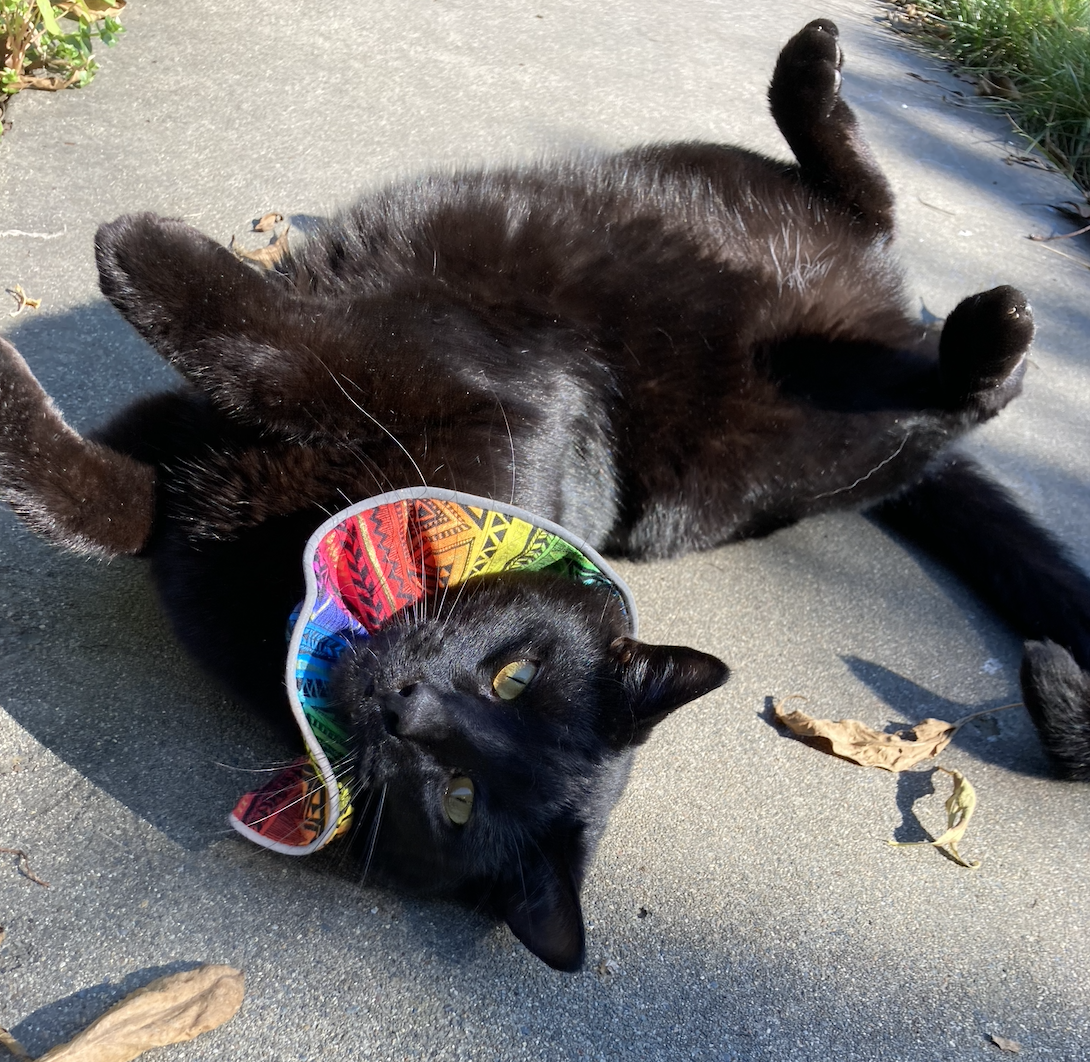
Last But Not Least, Controversial Cats:
The ASPCA answers, “if dogs can do it, why can’t cats?... Well, cats are obligate carnivores¹³.” They explain that cats require certain nutrients, especially Taurine, which is usually animal-derived, and that cats are also not as good at digesting carbohydrates, so a vegan diet can be risky for cats and they don’t recommend it.
On the other hand, commercial vegan cat food brands do exist and are specially formulated to meet their needs—including with Taurine and Vitamin A supplements—such as Benevo vegan cat food.
What the Science Says
While research on vegan cats is limited, recent studies show positive results similar to those of dogs fed vegan diets. For example, the same systematic review that found positive effects for plant-based dogs found that cats fed vegan food remained healthy, too (“there is little evidence of adverse effects arising in dogs and cats on vegan diets”)⁷.
Further, a large 2023 cross-sectional study including more than 1,300 cats found that “guardians feeding plant-based diets did not report worse overall health. In some cases, they even reported fewer digestive or liver-related issues and more ideal body condition compared to cats fed conventional meat-based diets.¹⁴” They concluded, “Considering these results overall, cats fed vegan diets tended to be healthier than cats fed meat-based diets. This trend was clear and consistent. These results largely concur with previous, similar studies.¹⁴”
Cats Conclusion: Up in the Air
Cats remain the most controversial species when it comes to vegan diets. Unlike dogs, cats are obligate carnivores with specific nutritional requirements. While some recent studies have found promising results for cats fed carefully formulated vegan diets, major veterinary organizations remain cautious and additional long-term research is needed. So, while a well-formulated, commercial vegan adult cat food has not been officially approved or recommended by organizations like the ASPCA, with more and more emerging scientific research finding few negative effects and even health benefits for vegan cats, perhaps the consensus will change in the future.
Summary: Which Pets Can Be Vegan? 🌱🐾
To conclude, the research shows that many pets can thrive on plant-based diets, so vegan pet owners don’t have to compromise their values of non-exploitation and compassion for all animals. For a quick review of the pets discussed here:
🐰🟢 Natural herbivores like bunnies and guinea pigs: Green light for a vegan diet
🐶🟢 Dogs, who are natural omnivores: Green light for a vegan diet, from the scientific literature and the AVMA
🐱🟡 Cats, who are natural carnivores: No-go for a vegan diet from official animal welfare organizations like the ASPCA, but emerging green light from the latest and growing scientific research
References
VegNews. (2024). Special Report: The Shocking Environmental Footprint of America’s Dogs. https://vegnews.com/sustainable-dog-food-environmental-footprint-america-dogs & Sentient Media. (2023). Pet Food’s Environmental Impact Can’t Be Ignored. https://sentientmedia.org/pet-food-environmental-impact/
ASPCA. (n.d.). What treats are safe for my rabbit? https://www.aspca.org/news/what-treats-are-safe-my-rabbit
Fresh Patch. (n.d.). The truth about bunny care: From diet to indoor living. https://www.freshpatch.com/blogs/news/the-truth-about-bunny-care-from-diet-to-indoor-living
PDSA. (n.d.). Your guinea pig's diet. https://www.pdsa.org.uk/pet-help-and-advice/looking-after-your-pet/small-pets/your-guinea-pig-s-diet
Axelsson, E., Ratnakumar, A., Arendt, M.-L., Maqbool, K., Webster, M. T., Perloski, M., Liberg, O., Arnemo, J. M., Hedhammar, Å., & Lindblad-Toh, K. (2013). The genomic signature of dog domestication reveals adaptation to a starch-rich diet. Nature, 495(7441), 360–364. https://doi.org/10.1038/nature11837
Bosch, G., Hagen-Plantinga, E. A., & Hendriks, W. H. (2015). Dietary nutrient profiles of wild wolves: Insights for optimal dog nutrition? British Journal of Nutrition, 113(S1), S40–S54. https://pubmed.ncbi.nlm.nih.gov/25415597
Domínguez-Oliva, A., Mota-Rojas, D., Semendric, I., Whittaker, A. L., & Mora-Medina, P. (2023). The impact of vegan diets on indicators of health in dogs and cats: A systematic review. Veterinary Sciences, 10(1), Article 52. https://pmc.ncbi.nlm.nih.gov/articles/PMC9860667/
University of Illinois College of Agricultural, Consumer and Environmental Sciences. (2023, March 27). U of I study gives a thumbs up to carefully formulated vegan diets for dogs. https://aces.illinois.edu/news/u-i-study-gives-thumbs-carefully-formulated-vegan-diets-dogs & Roberts, L. J., Jackson, M. I., Swanson, K. S., et al. (2023). Apparent total tract macronutrient digestibility of mildly cooked human-grade vegan dog foods and their effects on blood metabolites and fecal characteristics, microbiota, and metabolites of adult dogs. Journal of Animal Science, 101, skad093. https://academic.oup.com/jas/advance-article-abstract/doi/10.1093/jas/skad093/7086640?redirectedFrom=fulltext&login=false
University of Winchester. (2024, September 16). Dogs can be healthier on a vegan diet than meat-based alternative, says new study. https://www.winchester.ac.uk/News-and-Events/Press-Centre/Media-Articles/Dogs-can-be-healthier-on-a-vegan-diet-than-meat-based-alternative-says-new-study.php
American Veterinary Medical Association. (2018). Considering alternative diets for pets? Journal of the American Veterinary Medical Association, 253(11), 1425–1426. https://avmajournals.avma.org/view/journals/javma/253/11/javma.253.11.1425.xml
Royal Canin. (n.d.). A guide to changing your dog's food. https://www.royalcanin.com/us/es-us/dogs/health-and-wellbeing/a-guide-to-changing-your-dogs-food
Farm Sanctuary. (n.d.). Should Your Pup go Plant-based?: A Canine Nutritionist Weighs In. www.farmsanctuary.org/news-stories/farm-sanctuary-vegan-dog-food-healthy-dog-rescued-animal/
ASPCA. (n.d.). Why can't my cat be vegan? https://www.aspca.org/news/why-cant-my-cat-be-vegan
Knight, A., Brown, H., & Bauer, A. (2024). Vegan versus meat-based cat food: Guardian-reported health outcomes in 1,369 cats, after controlling for feline demographic factors. PLOS ONE, 19(9), e0310084.https://pubmed.ncbi.nlm.nih.gov/37703240/
Minnesota Companion Rabbit Society. (n.d.). GI stasis in rabbits. https://www.mncompanionrabbit.org/gi-stasis-in-rabbits